

The ever so deteriorating media in Pakistan has been a relentless issue for all since it directly affects us. Glancing at rich plots in former Pakistani soaps, the vastness of the critical coverage of nationwide matters, and the diversity present, one can only assume it has worsened over time. Why did this happen? one may ask. To this comes one word: PEMRA.
What is PEMRA?
Pakistan Electronic Media Regulation Authority, or PEMRA, is liable for the regulation and endowing of licences of mass media culture. Moreover, it also oversees the means of dispatch, education and entertainment provided to citizens.
For an organization designated a higher authority, certainly, there was an exploitation of given power. Hence, the aftermath of said mishandling resulted in what we see in our media nowadays.
However, the question prevails: how did PEMRA change the media in Pakistan? In this article, we will discuss the restriction of freedom, rehashing, perpetuating repressive views and misrepresentation, whilst exemplifying the role of PEMRA.
Recycled Narratives
If you happen to turn on any Pakistani serial, you will most likely find the same six (or seven) plots being replicated in separate settings. Regardless of Pakistan’s media history supplying us with rich tales where life is honoured yet never shunning the real tragedies, the television industry has taken a nosedive.
Perhaps, a lot of it could be based on the introduction of the ratings, causing many creators to take the route into acquiring easy money. Focusing on more domestic affairs, marriages and certain societal circumstances instead of light-hearted plots to ease us of our burden or authentic stories to move cores.

The golden age of Pakistani Television provided us with dramas such as Tanhaiyaan where women took the reins of their own lives. On the contrary, women in dramas nowadays seem to await their knight in shining armour.
Censorship or Hijacking of Liberty?
The room for free expression and genuine accounts in our land has been shrinking. Questions have arisen regarding media liberation in Pakistan in the past. Although, it seems our answer may be what we dread. In 2021, five journalists were slaughtered in the line of duty. Despite being paid for favorable press, journalists are often working low-pay jobs. Many of whom suffer from harassment to be silenced.
Additionally, PEMRA’s rules of censorship do curtail the right to speech. Any unfavorable constructive criticism or media coverage is considered a threat. Alas, there is a reason why political issues are presented in extensive narratives yet certain subjects, such as sexual abuse, are dismissed as ‘immoral content’. Recently, a drama that tackles child abuse, Udaari, was issued a notice by PERMA for showing immoral content. The show contained scenes that were direct and shocking. In other words, the main aim was too dull such acts and exemplify the disgust. Meanwhile, dramas such as Sangat which romanticize rape, shown through an artful lens, and perpetuate victim-blaming were never doubted.
Furthermore, a recent ban on intimacy between married couples in Pakistani soaps caused an uproar amongst the citizens. Many took to calling out the hypocrisy of PEMRA for banning content based on religion. Whilst, at the same time, they promote domestic violence and other highly problematic aspects without a second thought.
Do women in Pakistan only weep?
As abovementioned, a persisting concern in Pakistani media is the lack of good representation of women on screen. The promotion of old-school patriarchal values and male-dominated households is an insulting portrayal of women.
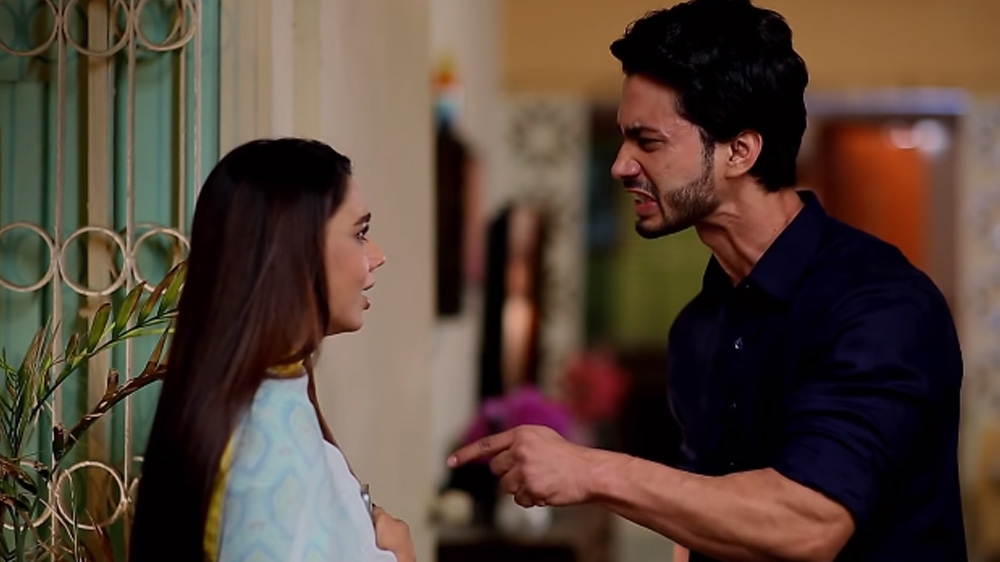
Women are mostly seen in distress. Although, if she’s not in despair, she’s the root cause of it.
It is either the too good to be true woman who has the power to dim the light of Mother Teressa or the evil woman capable of outshining the notorious Blood Countess, Elizabeth Bathory.
Haroon, H. (2022, March 17). There’s something missing in our entertainment industry today. Images.
The destruction of bonds of friendship between women is common. Most commonly, because of a man. Cultures of body shaming, toxic hero complex, and damsel in distress troupes are standard. To clarify, there seem to be a small number of realistic epitomes of women in our media.
Additionally, it would be unwise not to speak about women in advertisements. From over-sexualization to definitive gender roles, we can’t seem to catch a break.
What to expect?
In conclusion, preaching about the wrongdoings of media in Pakistan is of no use. Many have done so in the past and have been led to little change. Future generations are suffering from the lack of bizarre yet humbling experience of watching a good soap once in a while. They, also, seem to be attaining the wrong values presented.
Moreover, the television industry does not end with soaps, news broadcasting has been a major problem too. News Channels in Pakistan will plaster headlines of a rave party occurring in a university but refuse to focus on what’s vital.
In short, all that can be expected is for authorities to take charge of improving the stale narratives and providing the country with a right to express themselves. Thus, furthering the expression of art and culture in illustrative ways.


