
“She’s so bipolar”, were one of the few sentences that caught my attention while I was eavesdropping on a conversation. Furthermore, the sentence wasn’t out of the ordinary, like the other sentences thrown around in the conversation. First, it was grammatically incorrect, as bipolar is not an adjective but a noun. Second, it stood as a clear example of how we don’t need a world health day.
Yes, you read that right. I mean why have a world health day for individuals, who clearly know a lot about mental illness. Moreover, it doesn’t even take a second for people to “diagnose” a clean freak with an illness such as Obsessive-Compulsive Disorder (OCD). It doesn’t stop there if someone notices that a person is out of their fragile definition of “normal”: the game begins.
What game? you ask; the game of “diagnosing” them with the first illness that comes to mind and the most “popular” wins. “Psycho” has been the winner for a decade, but “schizophrenic”, is not coming slow, beating “psycho” for the last two years. All the sarcasm besides, this has to stop.
Mislabeling mental illnesses
Mislabeling mental illnesses – who we like any other tom, dick, and harry have zero ideas about- clearly shows how little we know about mental illnesses.
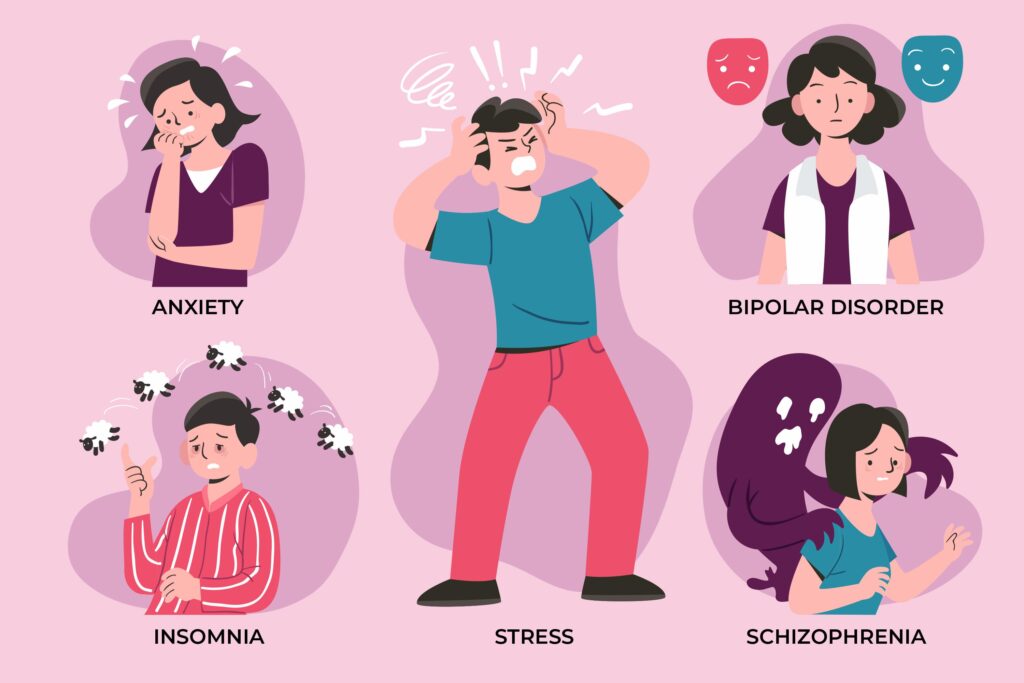
Depression is not a girl crying with mascara covering her perfectly flushed skin; it is the feeling of constant sadness and loneliness. OCD is not when someone likes to keep themselves clean; it is when the individual develops compulsive behavior due to the flow of intrusive and unwanted thoughts. Schizophrenia is not a girl who clutches her head in the most cliche pose; it is a lack of control the individual has in perceiving what is real and what is imaginary. Furthermore, mental illnesses are not a tag you throw to label someone but a reality that millions of people have to live with.
Side-effects of mislabeling individuals
When we mislabel someone with a mental illness, we don’t understand the persecution they will face. When we mislabel someone bipolar or schizophrenic, we are making them vulnerable to bullying. Furthermore, this may lead them to seclude themselves from society and eventually turning them into social outcasts. Moreover, it may lead the victim to self-diagnose themselves with an illness they don’t have.
Furthermore, the individuals who are diagnosed with mental illnesses also fall victim to such behavior in a more indirect manner. When we casually throw around names of mental illnesses, it loses its importance. We start believing that mental illness is just a “phase” or how it’s all a “drama”. Moreover, this belief affects the way we handle mental illnesses. Consequently, we treat the individuals diagnosed with a mental illness as liars or as attention seekers. Resulting in underfunding our mental asylum and research facilities regarding mental illnesses. We have to realize that labeling someone with a mental illness, just shows how insensitive we are towards the subject of mental illness.
Conclusion
It is time we do not repeat the mistake made by our ancestors. We should educate ourselves about mental illnesses and avoid using words such as bipolar casually. In conclusion, we should stop using mental illnesses as our go-to label.


One thought on ““She’s so bipolar”: mislabeling mental illnesses”
This important issue goes unnoticed by so many of us. Thank you for highlighting it!