

Workplaces present in Pakistan, whether in the public or the private sector, are cursed with nepotism and gender discrimination. These systems saturate executive roles with members of one family or one gender. Thus, leading to a lack of diversity. The only framework that seems to be the answer to the problems created by past systems is that of meritocracy. Based on a system that states people should be given positions in a hierarchy only on their merit.
The definition of a meritocracy illustrates an equal and just society. Where anyone—regardless of their upbringing —can achieve their dreams. However, in reality, it has been seen that meritocracies only help the rich and privileged to gain further wealth.
The framework of the present-day “meritocracy”
The lottery of birth
In the status quo, our family background plays a huge role in our success, in both our academics and careers. Approximately 87 million people in Pakistan live under poverty. For a child who belongs to this strata, the prospects of getting an education highly depends on the child’s gender and their family’s attitude towards education.
Moreover, data shows that the percentage of female students drops significantly between the transition from primary school to secondary school. Furthermore, for a young boy who belongs to an underprivileged background, there are two options: abandon his studies to pursue low paying jobs or continue to study in government or NGO-run schools.
Out of the 41% of children who drop out of primary school, 40% of them are males.

The difference in the quality of education
The quality of education in public schools is atrocious, to say the least. Proper equipment such as tables, stationary, and electricity is not available to the students. Furthermore, public schools lack basic facilities such as washrooms, drinking water, and so on. Teachers appointed in the public sector are generally underqualified, in terms of both education and skill. Due to such inefficiencies, a student in public school is unable to develop critical skills. For example, the use of new technology, and many other essential skills that an individual needs to progress in life.
In addition, these deficiencies lead to vast differences between students hailing from private schools and those from public ones. Therefore, these differences compound and have devastating effects on individuals from public schools. Due to owing to a lack of resources such as college councilors and tuition, a majority of them fail to get into universities.


The flawed admission structure
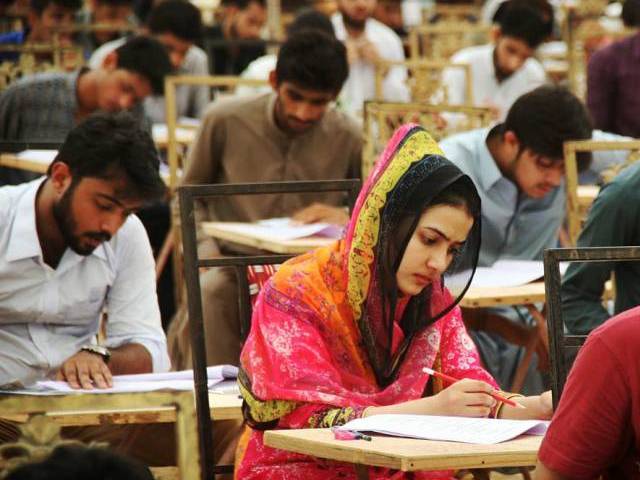
Many Pakistani universities rely highly on marks-based merit to select students for admission; this merit being decided by a university’s admission test. Such measures of merit do not consider an individual’s personality and can also filter out individuals hailing from poor backgrounds. As they cannot afford expensive tuitions and resources such as past papers that are almost essential to pass the test.
However, one may argue that many Pakistani universities also have an interview round in which individuals are chosen on the basis of their personality. Many public schools in Pakistan lack extracurricular activities, through which students can discover their passion and enhance their personality; therefore, a student from the private schooling system is likely to ace this round as well.

Side-effects of meritocracy
The inability of individuals from lower-class backgrounds to obtain higher education creates a wealth gap. Furthermore, leading to wealth inequality and lower standards of living. Therefore, the privileged individuals, blinded by the idea of meritocracy, feel entitled to the success they achieve and see the poor as “dumb-witted” and “lazy”. Consequently, such entitlements can lead privileged individuals to treat the poor in an inhumane manner, which can lead to abuse and exploitation.
Conclusion
Meritocracies aren’t bad or evil, it’s the society that has twisted the system of meritocracy to only favor the privileged. However, this system can be implemented well only if society treats everyone with justice and fairness.
Meritocracies can only work in Pakistan when the child of a maid and the child of a businessman get the same quality of education. In conclusion, a just and equitable society is the answer to the side effects caused by meritocracies.


One thought on “Meritocracy: an illusion of equality”
Wonderfully put! This is something we need to talk about more often, props to the writer for shedding light on such an important issue that surrounds us all.