

The Quran can change you. The abundance of lessons and guidance placed in it by Allah SWT is staggering. Among these lessons is the lesson on forgiveness. To understand the impact of choosing forgiveness, on us and others, the story of Nabi Yusuf AS from the Quran is particularly helpful.
A story over 3500 years old
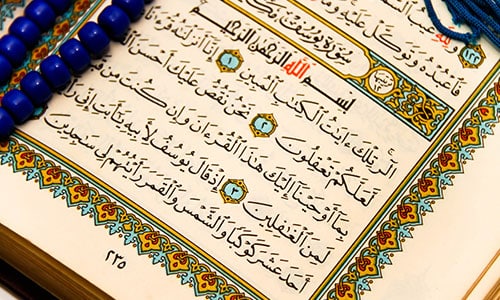
Nabi Yusuf AS was loved dearly by his father. He was kindhearted and bore no ill-will against anyone, even to his brothers who he knew did not like him (12:5). The brothers were jealous of their father’s affection for the boy and so one day they decided to get rid of him (12:8-9). They lied to their father about taking their younger brother out to play and then threw him in a well, expecting him to be taken away by travelers (12:12,15).
Years went by

Allah SWT placed Nabi Yusuf AS in the house of an eminent man in Egypt (12:21). However, after the man’s wife tried to seduce Nabi Yusuf AS (12:23), he prayed to Allah SWT to save him from such evil (12:33); and Allah SWT responded, “Then it appeared to them after they had seen the signs that he [i.e., al-ʿAzeez] should surely imprison him for a time” (12:35). Thus, Nabi Yusuf AS entered prison and stayed there for many years (12:42).
However, happy days did arrive; by Allah SWT’s will, Nabi Yusuf AS was released from prison, and he became the governor of the treasuries of Egypt (12:55).
Showing Forgiveness

By Allah SWT’s will, hard times led the brothers of Nabi Yusuf AS to him in Egypt (12:58, 88). Ultimately, they realized that the eminent governor standing before them was the brother they cast into a well many years ago (12:90). They accepted sincerely that they were wrongdoers. Nabi Yusuf AS, who endured years of separation from his beloved father and younger brother, said to them:
… “No blame will there be upon you today. Allah will forgive you; and He is the Most Merciful of the Merciful.”
Surah Yusuf verse 92
Nabi Yusuf AS had the option to not mend old fences. He had the option to not let bygones be bygones. However, he didn’t take it! He showed kindness to his brothers and reminded them of Allah SWT’s mercy to ease their hearts.
Along with Nabi Yusuf AS, Nabi Yaqub AS chose to forgive too. When the brothers returned home to their father, “They said, ‘O our father, ask for us forgiveness of our sins; indeed, we have been sinners.’ “ (12:97) He replied:
“I will ask forgiveness for you from my Lord. Indeed, it is He who is the Forgiving, the Merciful.”
Surah Yusuf verse 98
This is a man who knew from the beginning that his sons had plotted something against Nabi Yusuf AS (12:18). As the long years passed, his eyes had turned white from grief, “…’Oh, my sorrow over Joseph,” and his eyes became white from grief, for he was [of that] a suppressor’ “(12:84). Yet he never sought revenge against his sons, and when they admitted their wrongdoing, he let bygones be bygones!
It was only by Nabi Yusuf AS and Nabi Yaqub AS’s choice to forgive and forget that their family reunited after decades. Allah SWT has revealed, “And when they entered upon Joseph, he took his parents to himself [i.e., embraced them] and said, ‘Enter Egypt, Allah willing, safe [and secure]‘” (12:99).
Lessons learned on forgiveness

The story of Nabi Yusuf AS teaches us that if someone is sorry for wronging us, we should forgive them because it is the kindest thing to do. However, even if they are not sorry, Allah SWT still encourages us to forgive. He appreciates it when we show magnanimity towards each other, which in itself is a strong incentive to choose forgiveness.
…And indeed, the Hour is coming; so forgive with gracious forgiveness.
Surah Al-Hijr verse 85
Moreover, we have the capacity to let go of any wrong done to us. Allah SWT has advised us to forgive and so we are capable of it. Nabi Yusuf AS’s and Nabi Yaqub AS’s examples in magnanimity are reminders of this. It’s worth emphasizing that Nabi Yaqub AS’s choice to forgive his sons’ actions, which caused him immense grief for years, shows that we can rise above the pain we feel in order to forgive.
Finally, for our well-being, it is better to let go. Holding grudges, ill-will, or anything of the sort is a burden to carry. By forgiving we choose to be free, and we also save ourselves from wronging someone else. This is the choice that Allah SWT prefers for us. We must opt for it because its benefits last forever!
…and let them pardon and overlook. Would you not like that Allah should forgive you? And Allah is Forgiving and Merciful.
Surah An-Nur verse 22


