

A short-review on Elif Shafak’s beautiful novel revolving around the mystery of love and the revolution of a saint by a mystic.
Background
The Forty Rules of Love is a novel-within-a-novel written by the Turkish writer Elif Shafak. She is also the author of the novel “Three Daughters of Eve“.
The novel revolves around two parallel stories with a difference of seven intervening centuries. The influential part of the story is the transformation of Rumi by Shams Tabriz who teaches him the Forty Rules of Love. Additionally, the side characters make up the story more interesting with their own micro stories such as Suleiman the Drunk and Desert Rose the Harlot.
Further into the story, the reader feels in awe of Rumi’s poetry scattered throughout the novel with its timeless perfection. The poetry that is responsible for the separation of Shams, The Sun, and Rumi, the seeker.

Plot of the Novel
The prologue gives a hint of the story:
“If a stone hits a river, the river will treat it as yet another commotion in its already tumultuous course. Nothing unusual. Nothing unmanageable. If a stone hits a lake, however, the lake will never be the same again.”
The story is between two different cultures and time periods and told by a dozen narrators. But, the mesmerizing plot keeps the reader engaged. Moreover, the novel is divided into five parts fire, water, wind, earth and the void, the fundamental particles that constitute the universe. Besides that, every chapter starts with the letter “B”, that represents the basis of the creation of the universe.
The story is of Ella, who as a task of a literary agent, reviews the novel Sweet Blasphemy by Aziz Zahara. The novel contains the story of two mystics and their epic friendship. As the novel proceeds, she recognizes the absence of love in her life, and develops communication with the author. Then, Zahara introduces her to the spiritual dimension for the love she has been seeking during an uneventful life at the age forty.
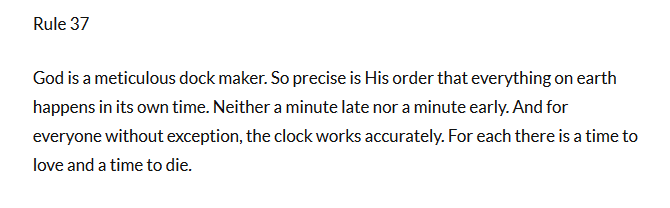
It is hard to enter the vastness of Ella and Zahara’s story, as the story of Rumi and Shams Tabriz is of far greater significance. The epic transformation of Maulana Rumi begins when he is isolated in his home library with Shams. Discussing each of the Forty Rules for a period of forty days. Shams Tabriz teaches him the importance of love of God.
Soon, Rumi and Shams develop an unusual association. When Shams leaves Konya untold, Rumi desperately searches for him but he never finds him. Consequently, he expresses his feelings by writing poetry. His poetry for Shams is now known as the Masnavi.
The Importance of “Forty”
“Forty is a most beautiful age for men and women. In mystical thought, forty symbolizes the ascent from one level to a higher one and spiritual awakening,” says Aziz to Ella.
The figure Forty is prominent in all the religions and cultures. One example is the period of 40 days of mourning after someone’s death. As described in the Quran, forty is the age when God commands the Two Angels to look closely over the good and bad deeds the person does. Moreover, the age forty is when a person reaches the maturity of life and is responsible for leading his life till that point. Also, forty is the age when The Prophet (P.B.U.H) first received the revelation from the Heavens.
Furthermore, the figure forty is considered important in Sufism as well. Shams Tabriz wrote the forty rules aka The Basic Principles of the Itinerant Mystics of Islam. And, they are believed to be universal, natural and invariable laws of nature- hidden behind the conversation of Shams and Rumi.
Conclusion
Evidently, Elif Shafak’s style is an easy read, even though the story is narrated by a dozen different narrators throughout. But, the story of Ella is the practical application of the Forty Rules that bring her charm and love when she turns Forty.
In the end, the epic friendship of Shams and Rumi that starts with an unusual association ends with an heartbroken partition. However, this de-attachment makes Rumi the greatest Sufi Poet, as he writes in a condition of expressing love for his companion.
In the end, the core of the novel and the epic tale between Shams and Rumi is Love. The love of Shams that astonishes Rumi greatly and changes his path of life. As, one of the Forty Rules describe:
The quest for love changes user. There is no seeker among those who search for love who has not matured on the way. The moment you start looking for love, you start to change within and without.
Rule 11
Like Love, this book too has to be experienced, not just read.


