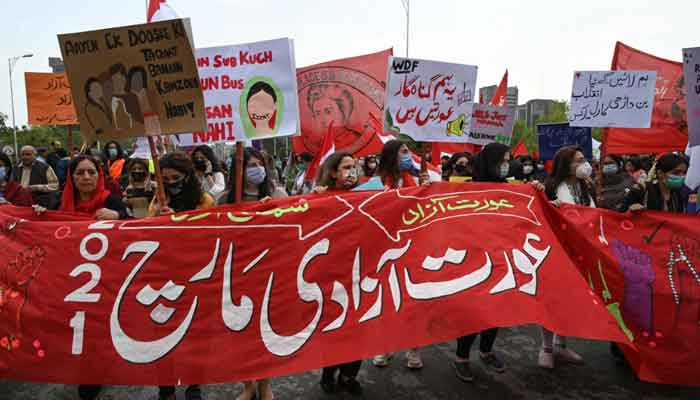
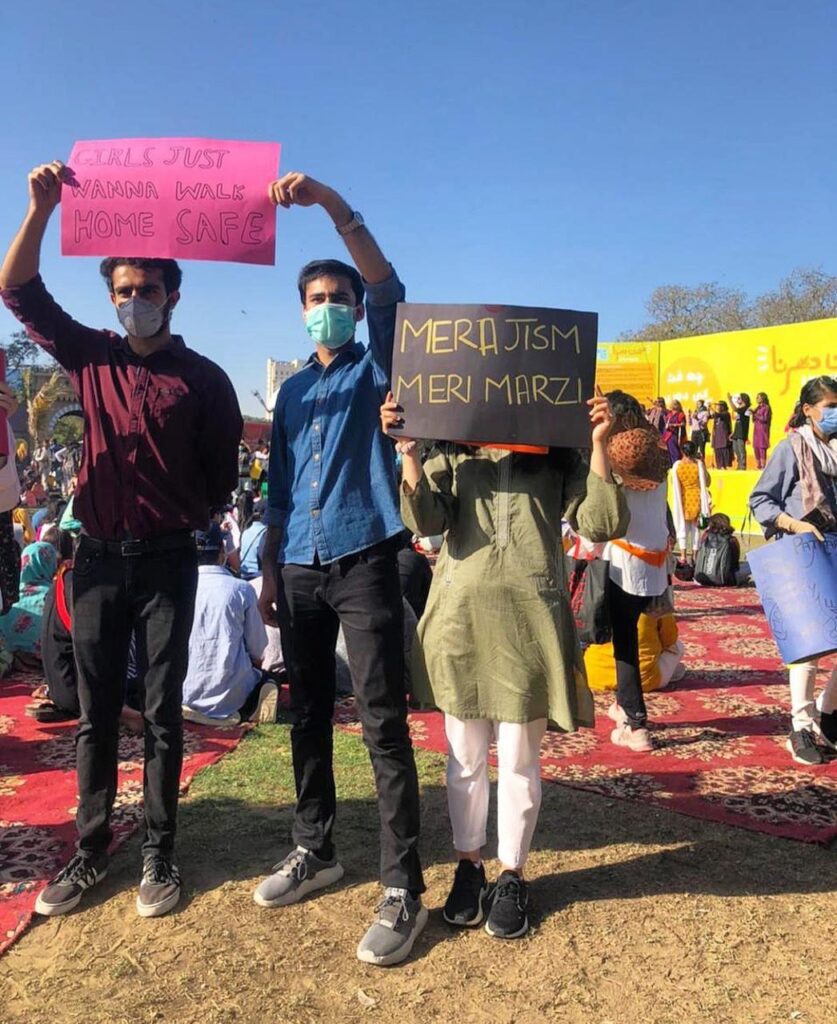
The slogan highly popularized for Aurat March (celebrated on International Women’s Day), since its inception, has been ‘Mera Jism, Meri Marzi’. The slogan was subject to much backlash on media channels, noticeably from a male-led dialogue. The misconstrued and misrepresented catchphrase needs clarification. The crux of the slogan demands consent, in short. And the need for consent has trickled down into every situation where women are taken advantage of; be it child marriages, rape, sexual harassment or forced conversions. But of course, the public feels offended by the idea of women being given fundamental rights. Instead, the slogan has become the punchline for sexist and misogynist jokes.
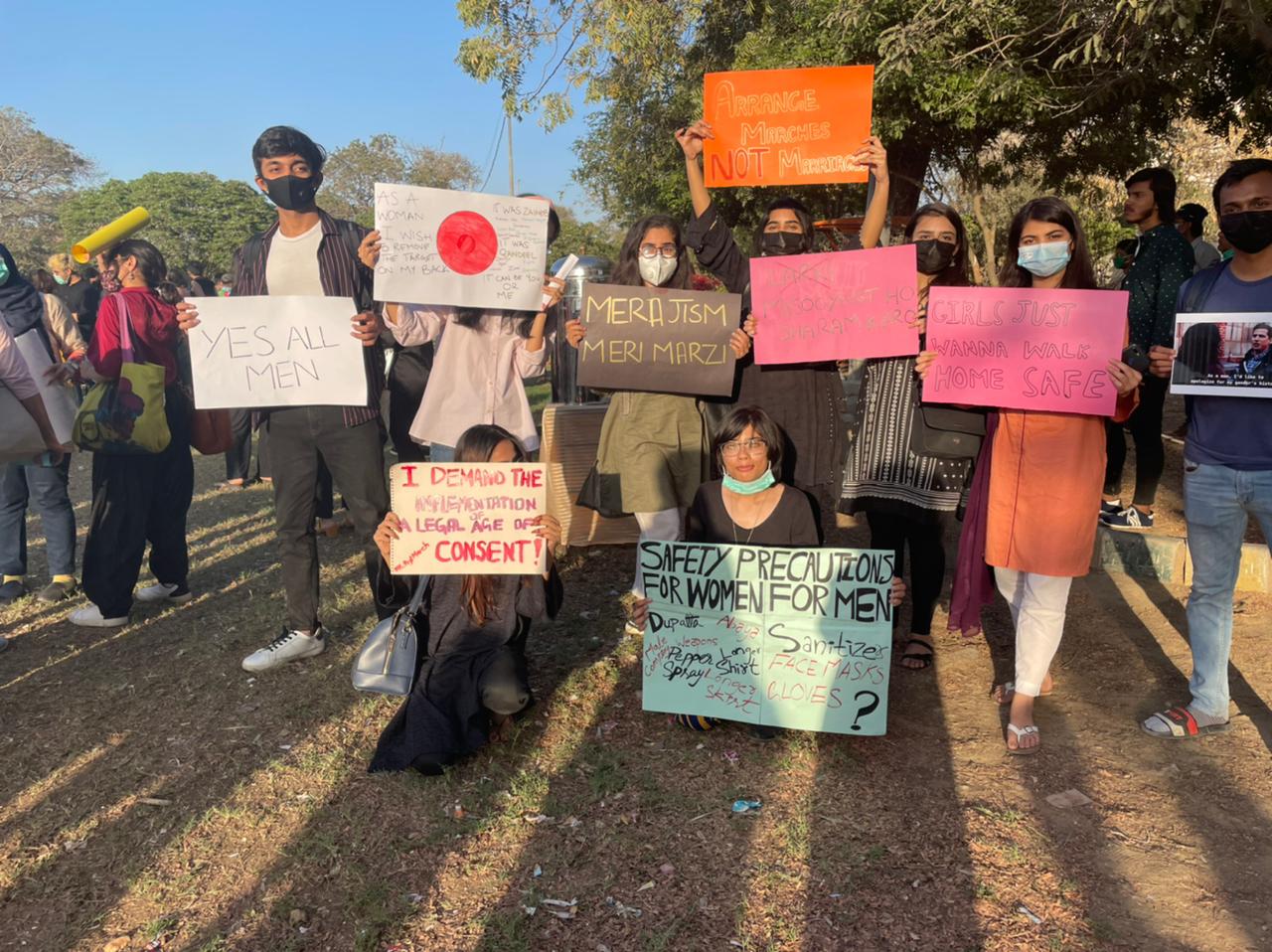
Posters Challenging Patriachy
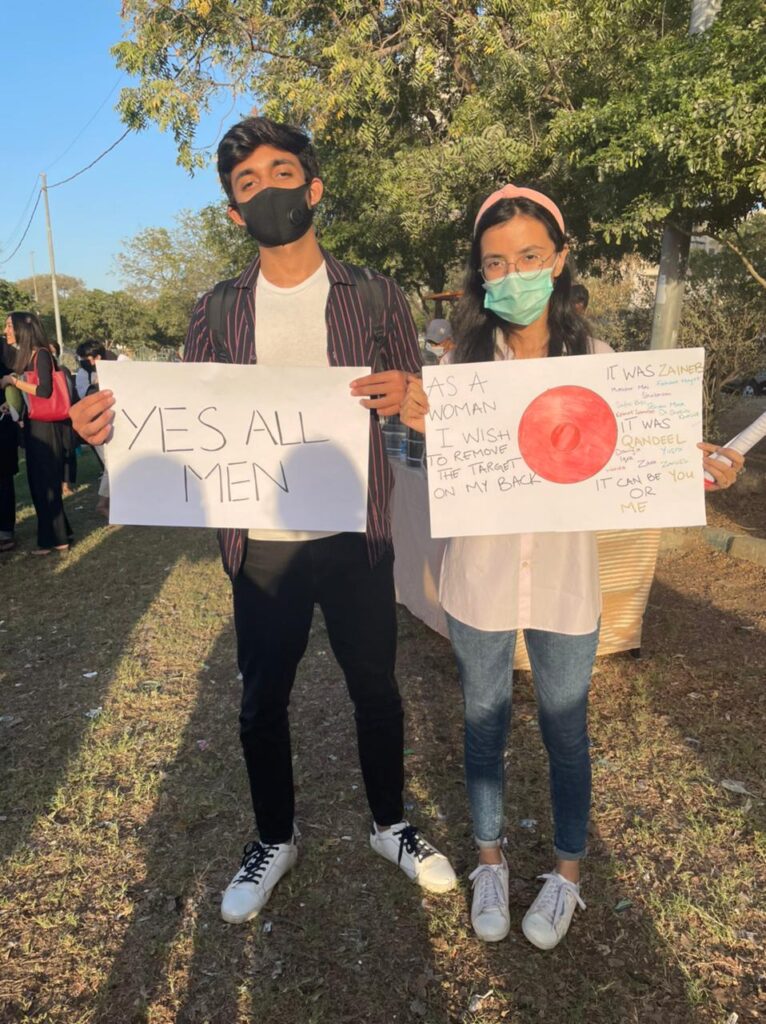
Once we arrived at Frere Hall, our posters seemed dull in comparison to the impressive pieces we saw there. So here’s some of the really eye-catching, witty posters.
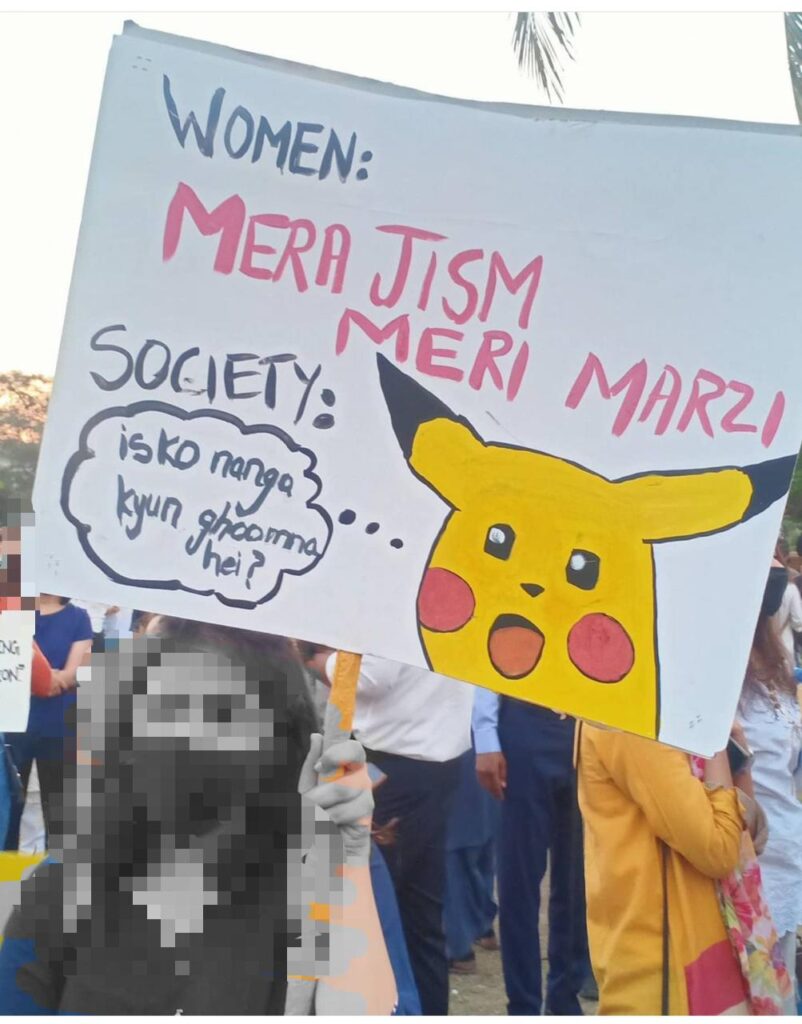
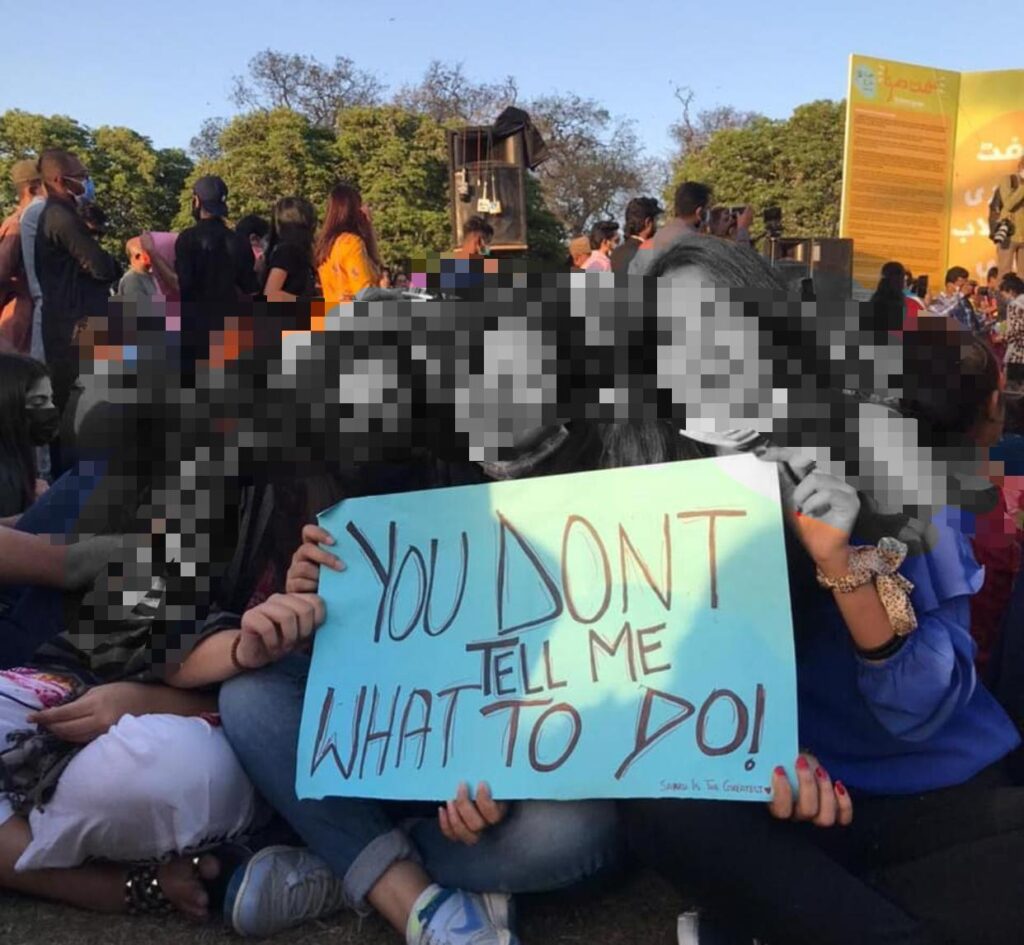
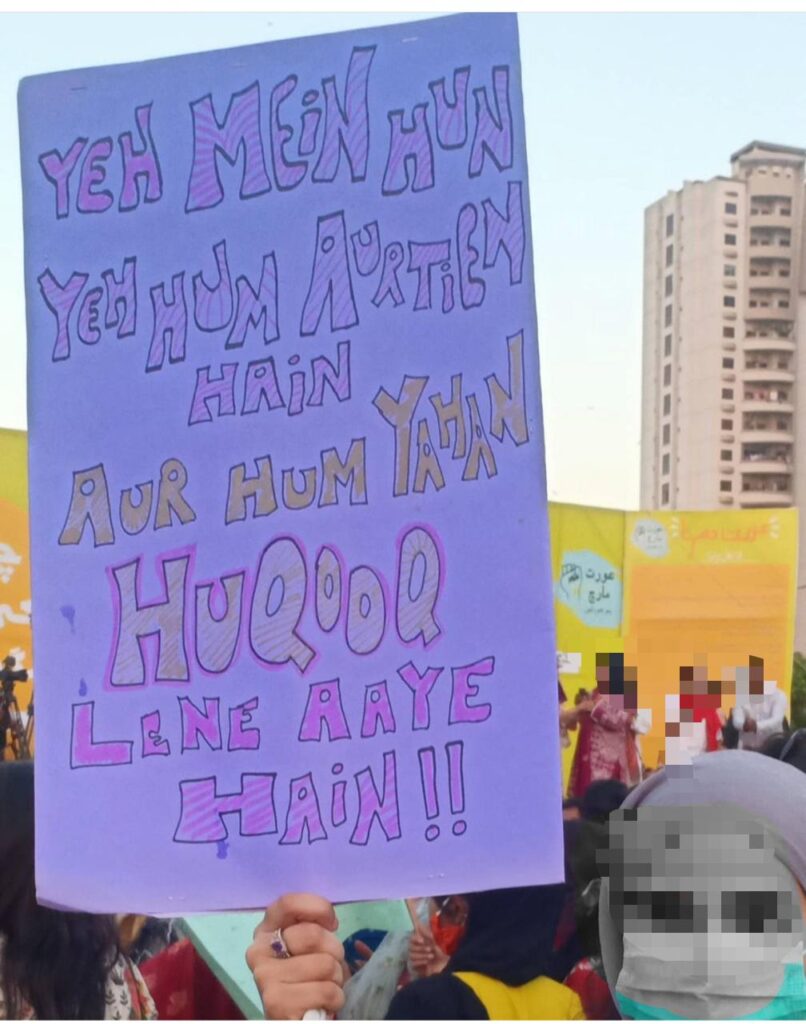
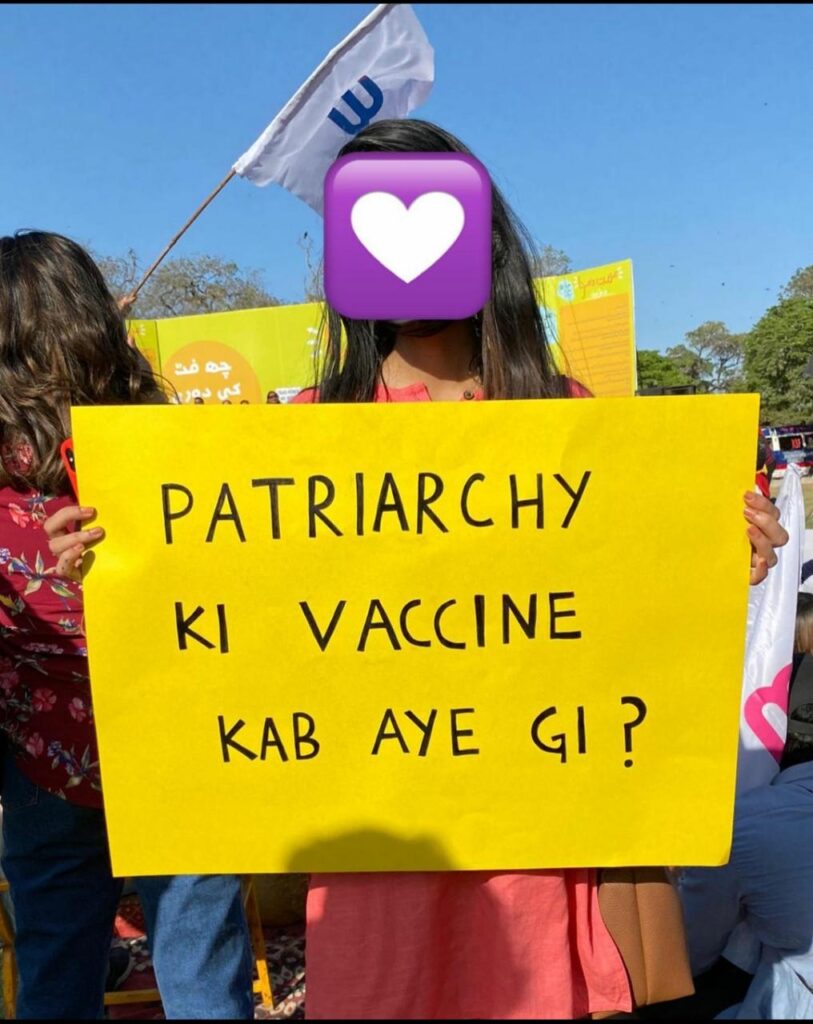
These posters are more than just words- they reflect the reality of what children, women, trans, and non-binary people face everyday. And they are a reminder that the fight for equality and freedom will go on as the slogan says: ‘Le kar rahain gey azaadi!‘
Collective Demands from Aurat March
Aurat March, in each province has put forth a charter of demands for their respective government. In Karachi, a 15-point agenda was set to ensure the rights of women, trans, and non-binary people. After attending the dharna, the influx of information was overwhelming.
Aurat March was never intended only for the cries of women, but for every marginalized community. Representatives of the Khwajasira community were present to educate the masses on their identity as women. Unbeknownst to me, during COVID-19, their health treatment was withheld on the basis of the social stigma surrounding their identity. Not only that, but police brutality is especially harsh towards their community. Because of this, the first demand on the 15-point agenda states the “Establishment of gender-based violence reporting cells across all police stations in Sindh and the rest of Pakistan”. The reporting cells should be led by gender-sensitized women and Khwajasira police officers with specialized training.
Fisher-folk Community at Aurat March
There is no such thing as safe minority in Pakistan. One such being the string of fishing folk that live along the coast line, westwards of Karachi. They often land up in Indian prisons for straying into Indian waters by mistake, leaving the women defenseless on-land. Due to their small numbers, and low income households, they remain ignored by the main political parties; despite their past loyalty towards PPP.
Their main grievance is with feudalism; the feudal lords misuse their lands for smuggling since the 1980s. If they resist, they face violence, leaving the women fisher folk to suffer. This leads us to the 15th clause of the Aurat March agenda: “We condemn the city-wide demolitions, that began in 2018, which continues to rob poor people of their homes and livelihoods until now”. Carried out under the banner of ‘Anti-Encroachment Drive’, the development and political agendas drive these demolitions.
Performative Activism
The term refers to activism done to increase one’s social capital rather than one’s devotion to the cause, often called slacktivism. Understandably, many of us have neither the capital nor the time to contribute to the movement. However, the bare minimum, pro-Aurat March posts by people with questionable beliefs are creating false narratives. People can now express concern about social or political issues with a click of a mouse. This raises the question of whether they truly understand what these ‘likes’ mean to bring as a benefit when very little thought is involved.
Ignorance isn’t bliss anymore. The internet has the power to leave lasting impressions. With increasing connectivity, one negative post, like the backlash of dancing at Aurat March, can change support for the entire cause. This could be due to the largely surface-level informed public who have herd mentality.
Closing Words
Aurat March was more than just a march; it was crowds full of women, students and trans folk. The organizers have for the fourth year in a row, continued to build ties and trust with some of the most marginalized and persecuted communities. They show up every year, for the platform that helps reach their voices to the masses. I have not come across that level of gender, class or ethnic representation before. I had the opportunity to hear women speak from the fisher-folk community and from the Khwajasira community. For future movements, such an organization is an example. It was truly revolutionary for me to be among the masses, rooting for one cause: equal rights.


7 thoughts on “Aurat March: ‘Mera Jism, Meri Marzi’”
Very well written and informative article.
Thank you Zunaira!
I absolutely love the inclusivity in this article and it’s a must read for those who still continue to use this slogan as meme material. Wonderful job :))
Thank you for your kind words 🙂
This is one of the most informative pieces I have come across, not only did it speak about the demands of women at the march but it has highlighted every important clause which has been created to protect other minorities and I am sure there are many others just like me who were completely unaware about that up until now. Thankyou zara for this eye-opening article. Keep up the amazing work!!
I loved reading the different agendas each city put forward for Aurat March, definitely give it a read sometime!
Thank you for mentioning the Charter of Demands – so many people skip that out! Loved the read.