
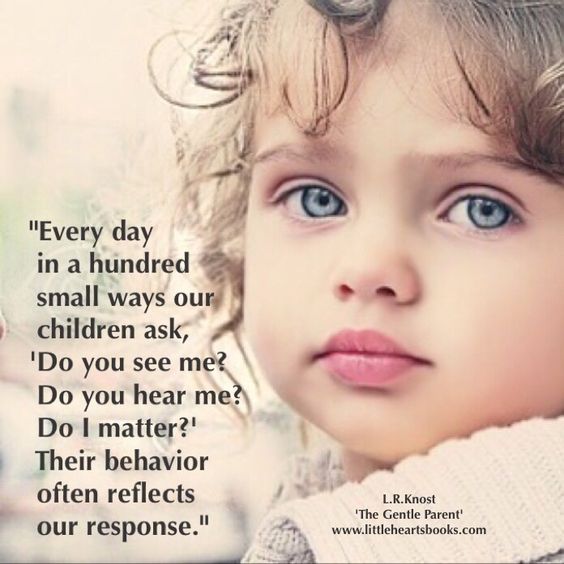
Our childhood plays a huge role in determining what kind of person we become. It determines who we want to be friends with, who we find attractive, our ambitions, and whatnot. But childhood is not always the perfect highland to envision future clarity from. So, should we change our radars? Should we stop being ourselves? That is not so easy. For instance, the type of people we like and connect to is not likely to change. Under any given circumstances, we are more likely to prefer people who we feel gravitated towards naturally.
It is as simple as convincing me to eat blueberry ice-cream instead of pineapple. You can have your reasons for liking the former, but I can be aged 12 or 65, I would still want pineapple, not blueberry. Cannot do anything about it. What we can do, however, is monitor our emotional triggers, and make sensible decisions. So, four pineapple scoops a week for when I am 12 and maybe one every two months when I am 65 (i hope so because I cannot live with any lesser).
Psychological insight into human behavior based on childhood
Let’s look at a more real example: If your parents had a habit of dismissing you off as “stupid”; it’s very likely to cause you to trigger when someone calls you stupid. In fact, it will especially hurt your self-esteem if it comes from a dear friend or some other loved one. Even now, as a grown-up, you’ll try to prove, in ridiculous ways, that you’re not stupid. A healthy reaction to this is telling yourself:
A) There are many types of intelligence and you don’t need to have them all.
B) No one ever learned anything until they were willing to look stupid.
You’re also likely to be attracted to patronizing friends because they smell of home. They love you but oftentimes belittle you and make you feel stupid. Instead of being passive-aggressive in these situations, it is healthy to have a conversation with them. You must try to address and engage with the problem so a solution can be sought. In fact, they may like being friends with you because they had a submissive parent growing up. So, to them, you smell like home. They feel like it’s their responsibility to take care of you. For them, they need to address this behavior.
The key takeaway from this is, don’t immediately dismiss people if they fall short. It’s hard because
A) We do like them.
B) We aren’t perfect ourselves and need to collectively work to fix our problematic behaviors
C) Amputating an infected limb shouldn’t be your first choice— it should be your last.
The Movie
The movie which prompted me to write this is Dear Zindagi, but this is not a movie review so please keep reading before forming a judgment.
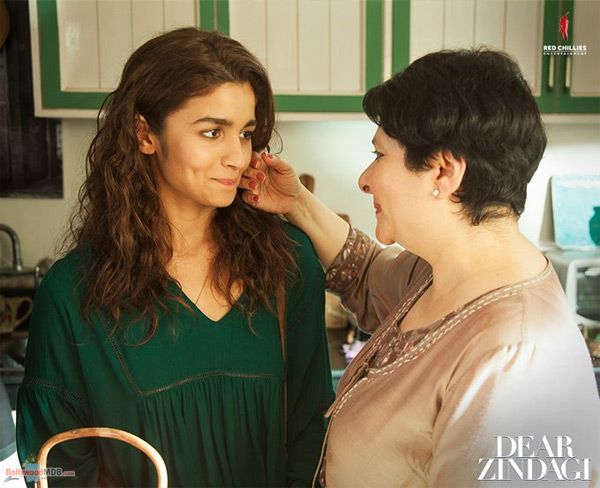
This movie is about suppressed emotional childhood trauma resurfacing in adulthood. The movie shows how sometimes not addressing the skeleton in the closet adversely affects everything you do in life from your work performance to your relationships. I am using the umbrella of the movie to explore a few ideas here.
What I loved the most is that there is no clear dichotomy between the good and the bad. In fact, no attempt has been made even to recognize the need for one. There’s a huge grey spot and that’s humanness. What is humanness but a struggle to do our best and yet err? is it to mess up due to the limitations of our understanding of the world?
Introducing Kaira
Kaira, the protagonist in this movie, has been shown as a career-driven, independent, and hungry-for-more woman, but she also has inhibited somewhat weird behaviors. For example, her aptitude of always liking things a bit messy or suddenly getting bored of a partner who’s showing her attentive love. Her responding to affection with detachment and irritability, and her outbursts of anger, make us want to know more about her story.
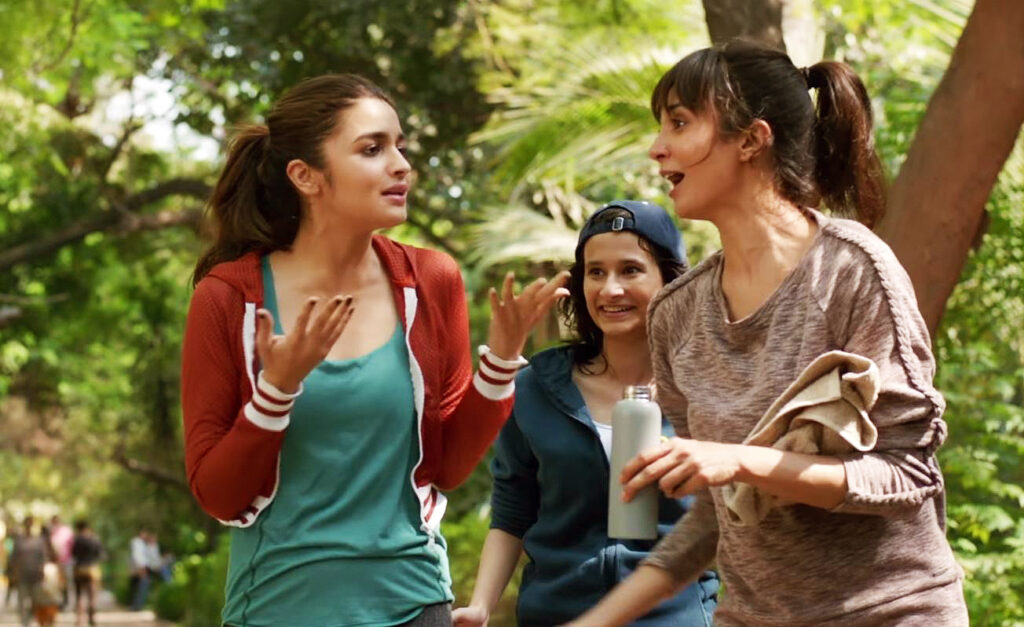
I will not waste time criticizing the “bollywoodness” of the movie as you can look up any review on google for it. However I can’t help touching upon a few things like for example, the needless melodrama in a few scenes, or unnecessary things like making the whole movie revolve around happiness-comes-from-within but, as a Bollywood force of habit, having a renowned actor make a cameo by walking towards her and her stumbling into his arms, seconds before closing edits. At this point, she has reached a milestone in her career and that was enough but wait the movie couldn’t have been a happy ending otherwise, right? (seriously, why?).
Why bring the movie into the talk?
Human beings, at their core, prefer to pay more attention to unconventional ideas/issues if they have an entertaining view to look at it from.
No one wants to read a paper on childhood emotional trauma but if u make a movie about it people will watch it and might learn a thing or two alongside a few ridiculously catchy songs and a familiar storyline. But maybe that’s ok. Just like Virginia Woolf said, “Art is not a copy of the real world. One of the damn things is enough”. In fact, if it was a copy of the real world it would become that same research paper no one had bothered to read in the first place.
The burden of a ‘soul mate’
Of the many noticeable moments in the movie, one of them which particularly interested me was when Kaira, the protagonist, confesses to her psychiatrist, Dr. Jehangir Khan, saying she thinks she’ll never find “the one”. To which he replies that we put too much burden on a particular individual to cater to our every need. He said, how would it be if we had a specific somebody just to have deep conversations about sports with(the guy really said please stop bugging your wife to watch football with you, sir, it doesn’t work like that), and someone else just to talk about our field of academia with? In this way, we’d put the lesser burden on someone who serves as just one type of relationship in the sea of other relationships we have. Her reaction was similar to mine, she said, well I’ve never thought about it like that.
This conversation also reminded me of this quote I randomly saw somewhere
I think the reason people think their partners can be their therapists is because they think therapy is just talking about their feelings. Therapy is a treatment plan; psychology is a science. Having someone listen to you vent is not the same as creating a plan to heal trauma.
Horacio Jones
Social stigma surrounding therapy
Another noticeably applaudable thing was addressing the stigma of going to a therapist. Not just that, the reason for it too. In desi societies, people usually consider themselves qualified for therapy once they’re in the suicidal, red zone, last stage, or something.
Kaira cannot exactly be termed as depressed yet she just decides to go check out a therapist because she hasn’t been able to sleep for 3 days. Which is a huge step, I believe, in making people more open to the idea of seeking help when their mind won’t stop eating away at something. Kaira catches up with her housemaid on a zoom call and tells her she’s seeing a doctor. Her maid asks “kyun didi aapko kya hua?” and she assures her there’s nothing wrong with her physically, and that it’s a DD aka ‘dimag ka doctor’. “When you’re emotionally troubled about something you can go see one. It will help sort out your issues.” she adds. And then the maid innocently says, “wah didi aise bhi doctor hote hain? Phir tou sabko jana chahiye na?”
Forgiveness–the only way to be free
Another healthy concept introduced was how she ultimately forgives her parents. She realizes they too are human beings after all. Doing so liberates and relieves her of the psychological burden she’s been carrying with her all her life. Letting go of the past frees her of its negative, toxic shackles and also makes her truly happy. I could not help but contrast it with the same actor’s confrontation in another movie where she ends up abandoning her family altogether. Each character had their own storylines to follow but it was nice to see both parties acknowledge their shortcomings and come to the realization that while the past cannot be undone, work can be done to make the future more bearable. Communications can be improved and eventually, hearts can be mended.
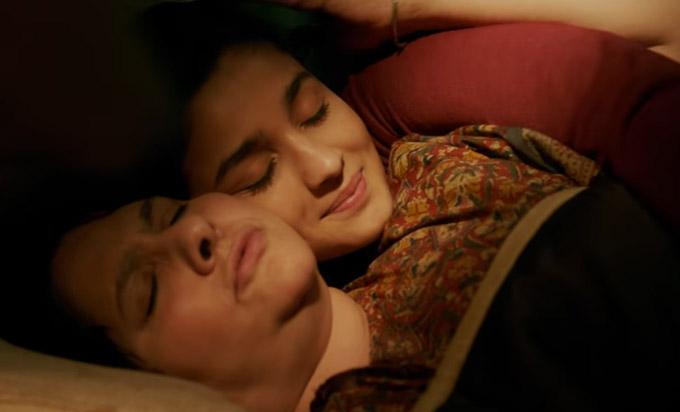
From watching Kaira crudely confront her mother over not knowing what kind of food she likes to happily stick a memo of her favorite foods on the refrigerator for her mother to take note of, we can see she’s come a long way. Other small things like bursting inside your parent’s room while they sleep and forcing yourself in the middle of the bed– since you never had the chance to do so as a child– spoke volumes on how rewarding a change of perspective can be. Consequently, she can sleep soundly now, has a healthier relationship with her parents, and is content with life. All this progress helps her thrive in her career as well.


Favorite childhood memory?
Lastly, as stupid as it may sound, I really liked the idea of playing kabaddi with the sea. So the basis of the scene is Kaira’s therapist asking her to name a fond memory of her childhood. Kaira realizes she cannot think of any. People with bad childhoods naturally make an attempt to suppress it and move on. However, that’s not a good sign. Several studies show that spending memorable, happy times with your child helps in their development into a more healthy, confident and happy individual. So Dr. Jehangir shares how he applies that to his son, he says he does this thing with his son where they play kabaddi with the sea. He funnily adds that his reason for doing so is so one day his son doesn’t have to rack his head to think of a happy childhood memory in front of his therapist.

Verdict
Whenever I watch movies with my sister, much to her annoyance, I always point out logical flaws in the characters. But she’d always argue how we wouldn’t be having this conversation were we not watching the movie in the first place. Sometimes we forget logic might tick our brains to do what’s rational, but at heart, we are creatures moved by how something makes us feel. No matter what we’d like to tell ourselves otherwise. Therefore the message—even if it was in a plate full of chaos—was served: do not suppress your feelings but let them out in the open; feelings of sadness, anger, happiness, all of them. Examine them, try to understand them, seek professional help if needed, but don’t suffer alone in silence. You deserve to be happy and you deserve to live up to your full potential.


